Survival Water Filtration
Practical ways to find, make safe, and carry drinking water in Australian conditions.
Clean water is a top survival priority. This page covers fast, realistic methods to make water safer to drink during emergencies, travel, or off‑grid situations — plus simple gear that works in the real world.
▶ Video Guides
Short, practical videos covering filtration, purification, storage and field tips.
Video 1 – Using Bark to filter water!
Video 2 – Drinking water from Trees!
Video 3 – Getting Drinking Water from the Ocean
Video 4 – Purify Dirty water
🧭 Core Concepts
- Filtration removes particulates and many microbes (bacteria/protozoa) depending on pore size.
- Purification inactivates/kills microbes (boiling, chemical tablets) and is your safety back‑up.
- Chemicals & heavy metals typically need activated carbon or specialised media; not all filters handle these.
- Redundancy wins: carry at least two methods (e.g., filter + purification tabs).
🔧 Practical Methods
1) Boiling (gold standard backup)
- Bring water to a rolling boil; let cool before drinking.
- Great for microbes; does not remove chemicals or heavy metals.
2) Chemical Purification Tablets
- Lightweight, easy backup; follow packet directions precisely.
- Allow full contact time; taste can be improved by aeration after treatment.
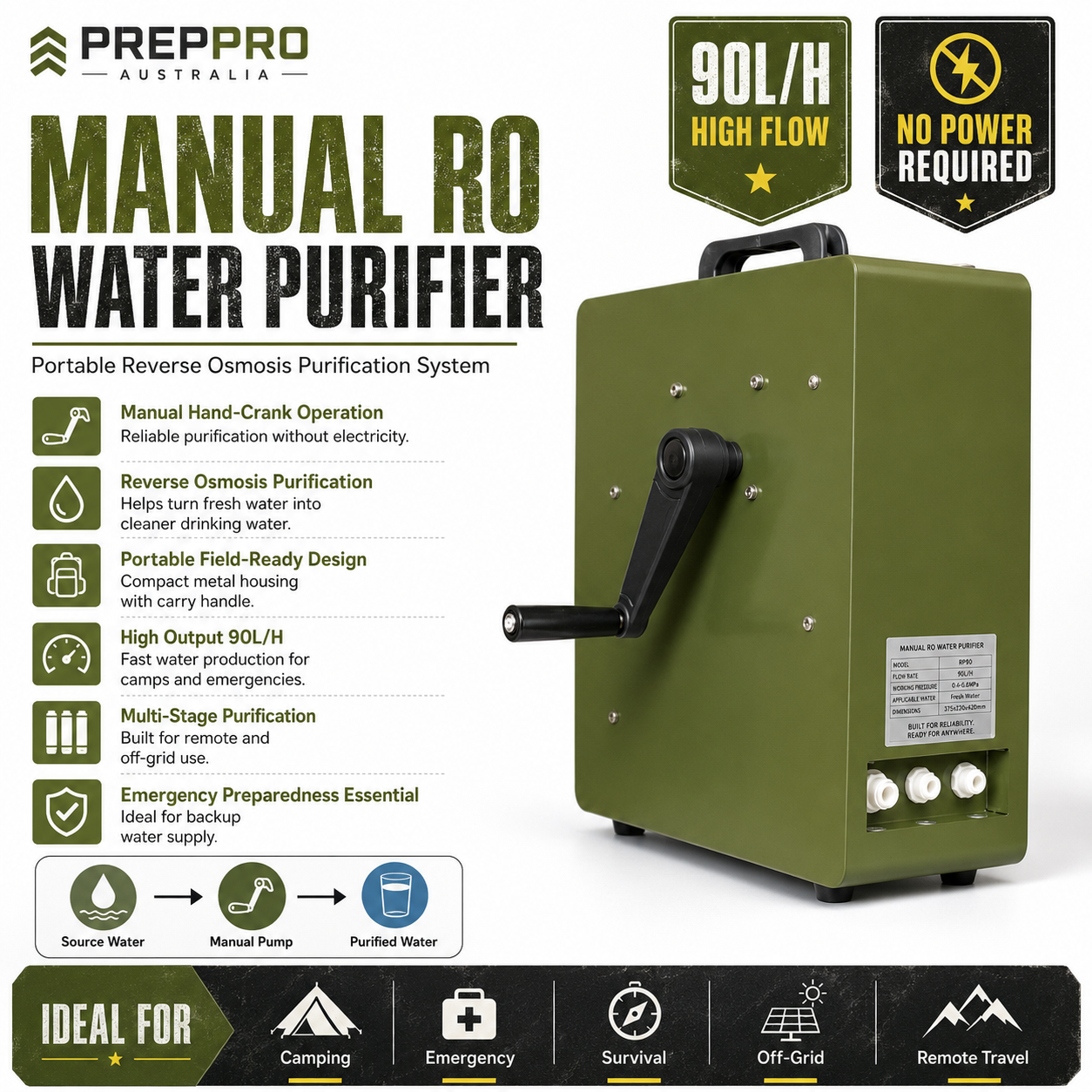
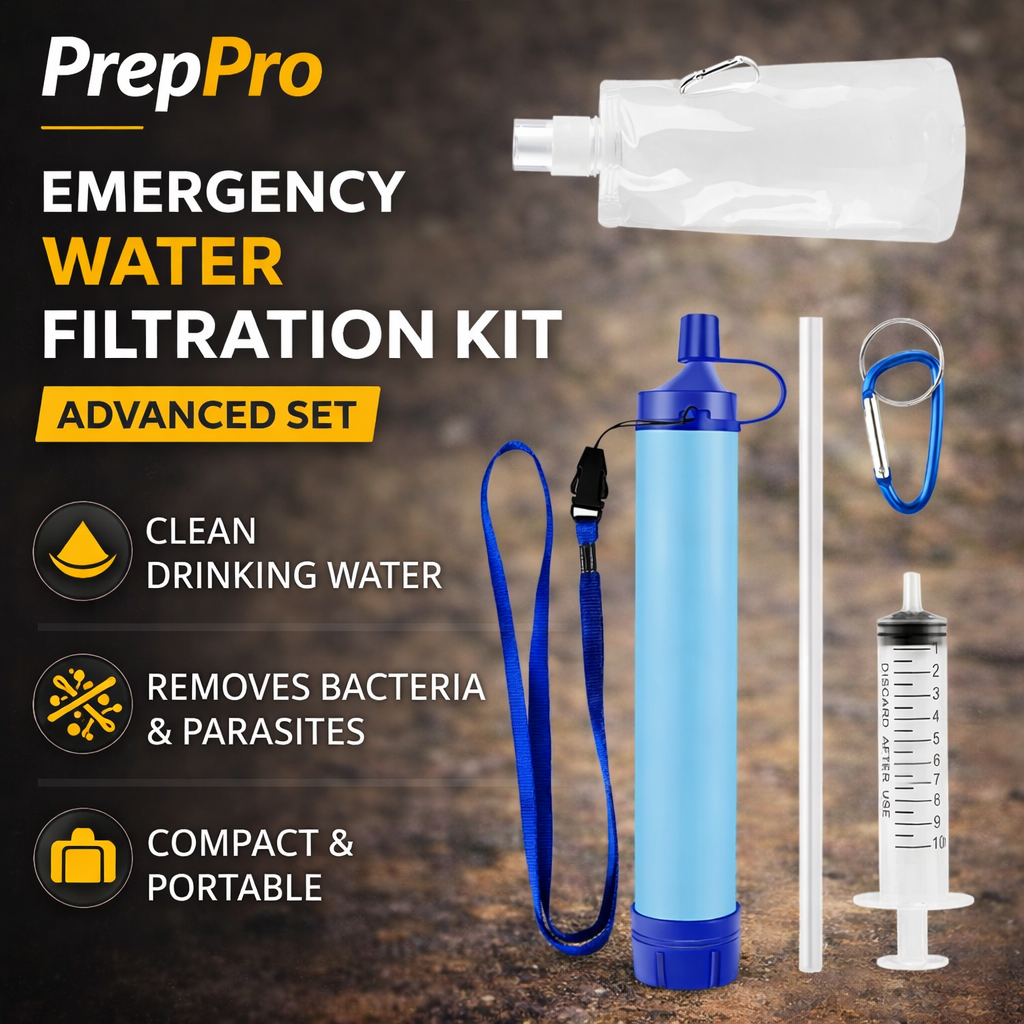
3) Portable Filters
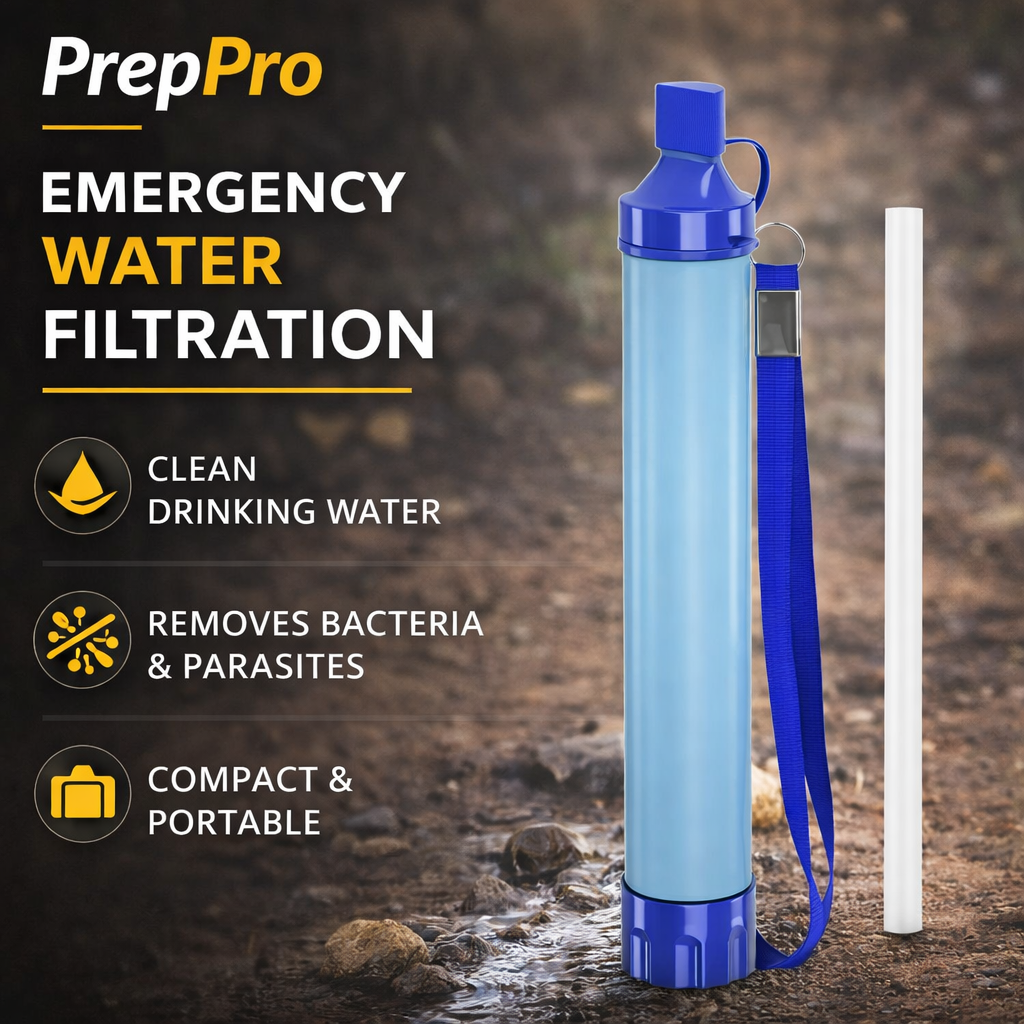
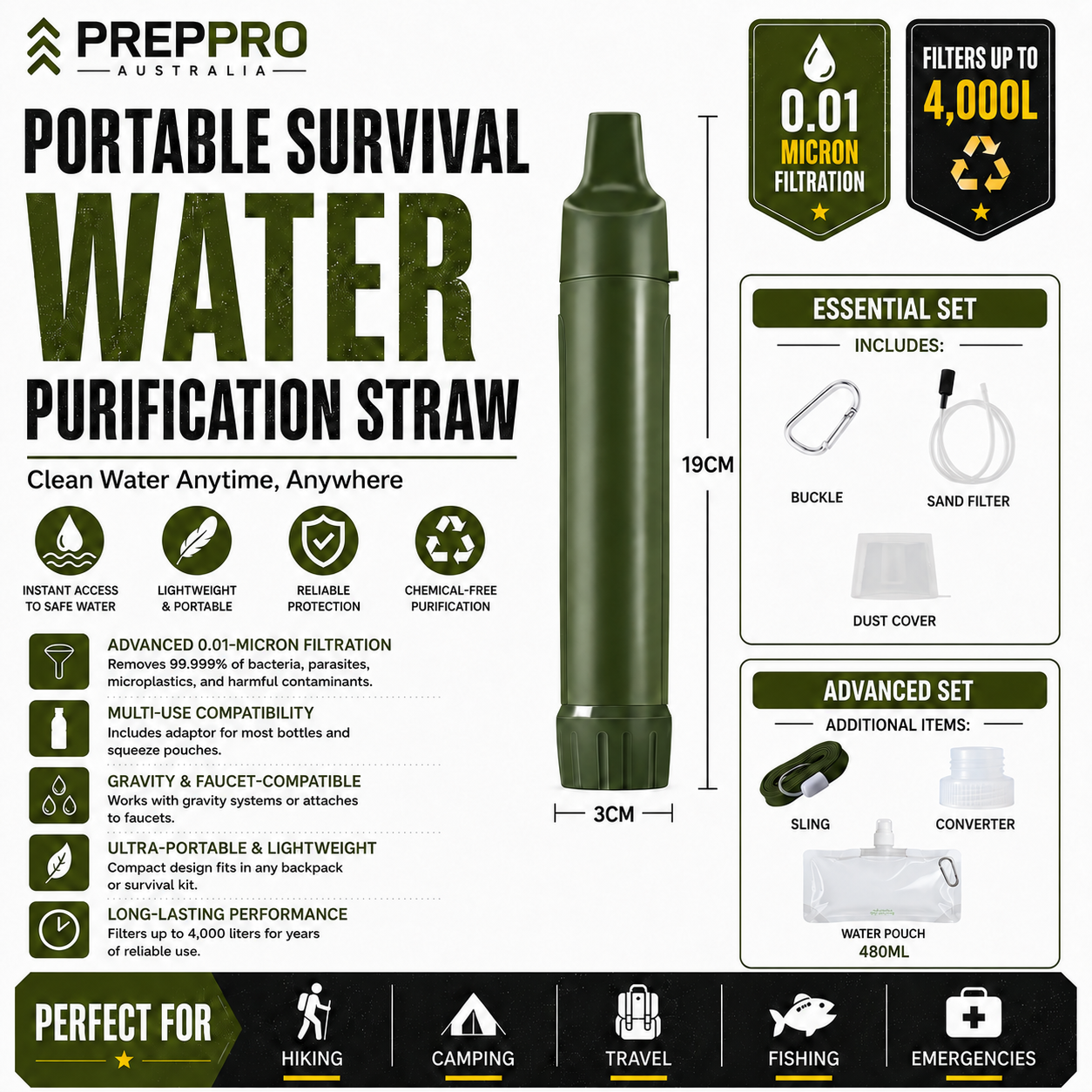
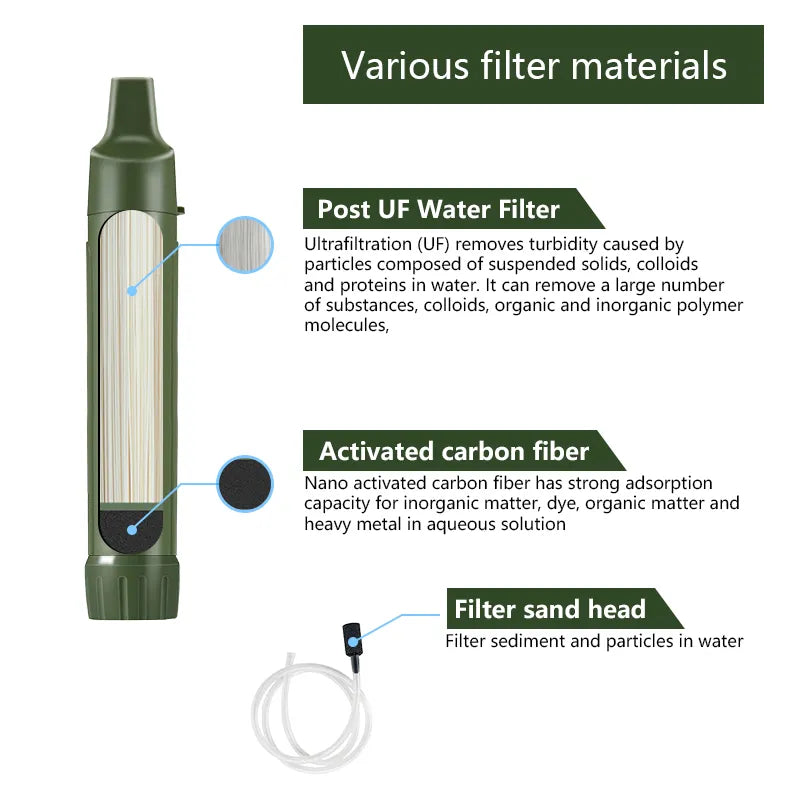
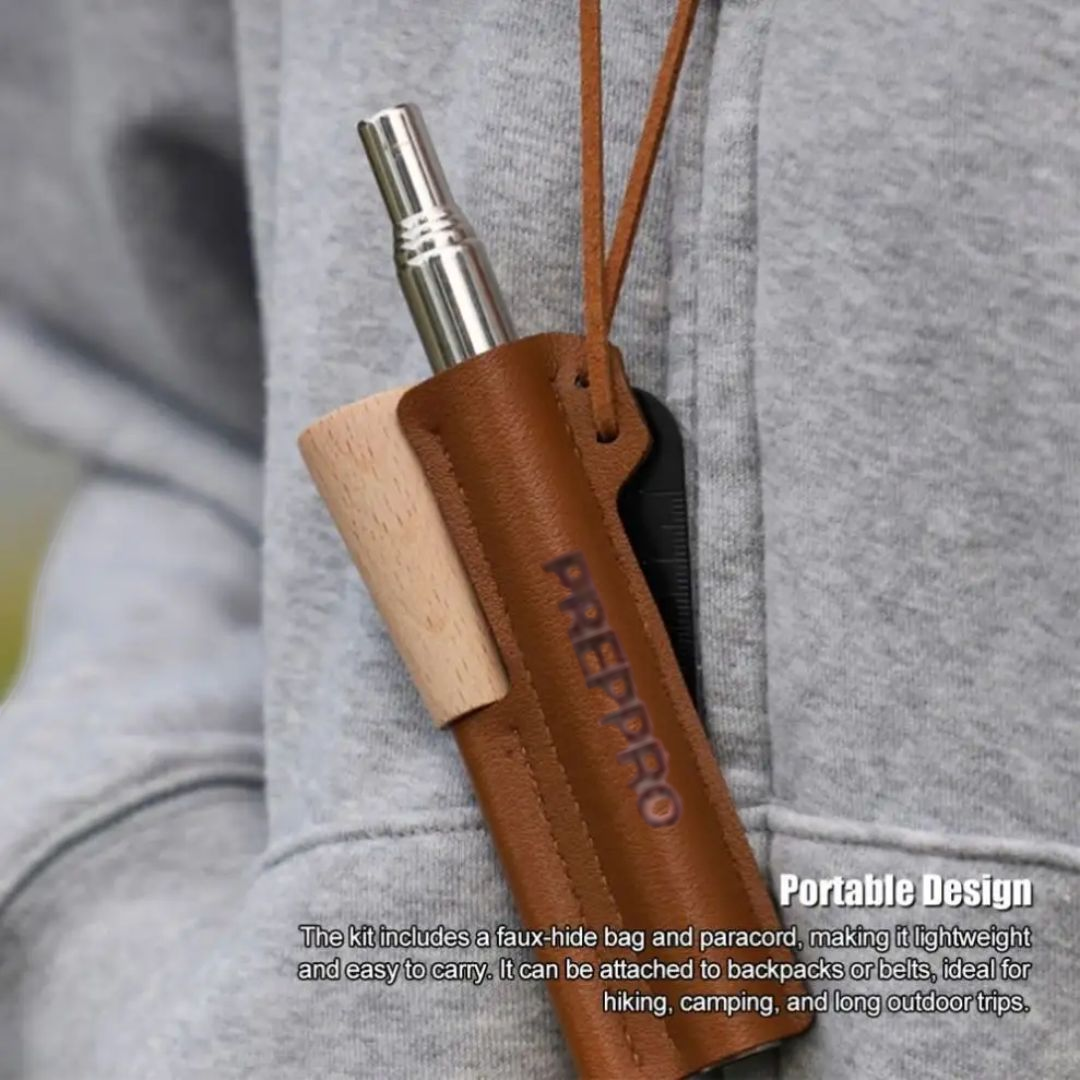
- Straw filters: ultra‑light emergency option for individuals.
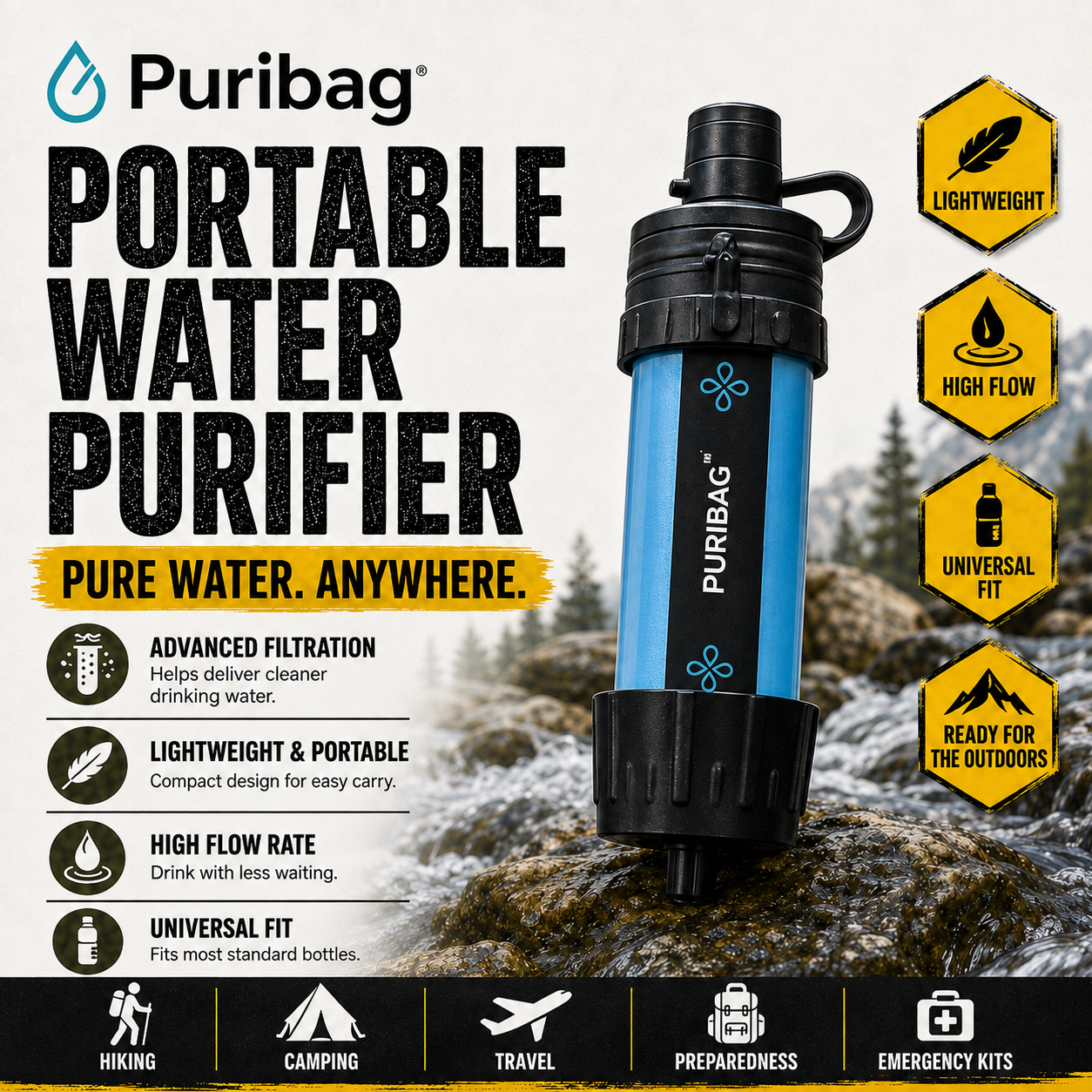
- Pump filters: fast and reliable; good for solo or pairs.
- Gravity bags: best for groups/basecamp; low effort, high output.
- Activated carbon stage: helps reduce tastes/odours and some chemicals.
4) Clarifying Dirty Water (Pre‑filtering)
- Let sediments settle; pour off the clearer water from the top.
- Use a clean cloth/coffee filter to reduce turbidity before filtering.
🚰 How Much to Carry
- Plan for at least 3–4 litres per person per day (hot weather or exertion needs more).
- For trips, identify refill points (streams, tanks, huts, service stations).
🧠 Field Tips
- Collect from flowing, clear sources when possible; avoid stagnant pools.
- Keep “dirty” and “clean” gear separate (hoses, bags, bottles).
- Back‑flush/maintain filters after use; don’t let them freeze.
- Carry a small backup (tabs) in case your primary fails.
🎒 Simple Kit (PrepPro Version)
- Portable straw or pump filter
- Gravity bag (group / basecamp)
- Purification tablets (backup)
- 2 × bottles or 1 × bottle + 1 × soft bladder
- Small cloth/coffee filter for pre‑filtering
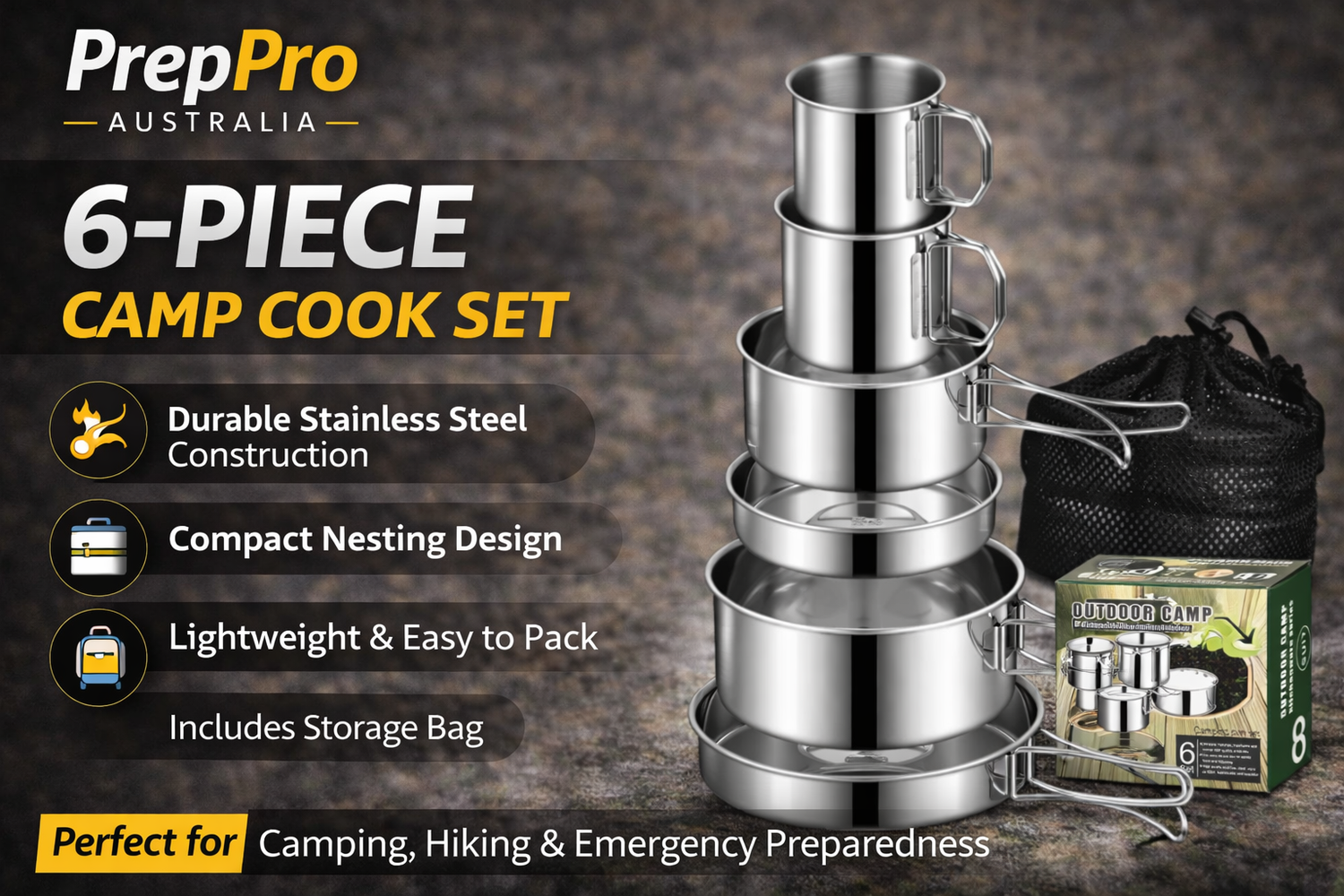
- Collapsible cup, spare caps, and a zip bag for “dirty” parts
⚠️ Important Safety Note
These tips provide general guidance. Source water can vary widely. Always follow manufacturer instructions for your specific filter or tablets and local public health advice during emergencies.