
72-Hour
Go-Bag
Your go-bag is the kit that gets you and your family through the first three days after you leave home. Bushfire, flood, storm or blackout, it means you can walk out the door in minutes, not hours.
Pack it before you need it. Keep it near your exit or in the car, and make sure everyone in the house knows where it lives.
What Makes a Good Go-Bag
A go-bag holds self-contained essentials you can grab instantly. A good one ticks four boxes.
Core Survival Essentials
These are the must-haves. Start here, then build out from there.
Water & Food
- Water: at least 3 litres per person, per day
- 72 hours of ready-to-eat food, like muesli bars, nuts, canned goods & dried fruit
- Water purification tablets or a filter straw
First Aid & Meds
- 7-day supply of medications in a waterproof pouch
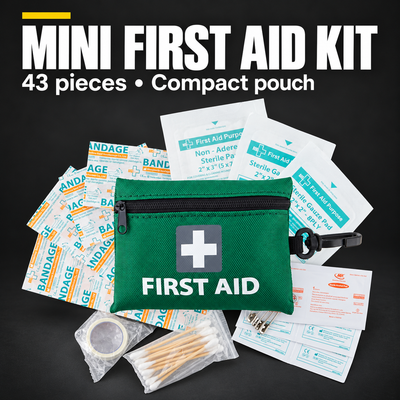
- First-aid kit with bandages, antiseptic, blister care & pain relief
- P2 or N95 dust masks
Light & Charge
- Fully charged power banks
- Phone & charging cable
- Battery or hand-crank torch (no candles)
- Multi-tool with pliers, blade & screwdriver
Clothing & Documents
You may be away from home for days. Pack for comfort, and protect the paperwork you'll need to recover.
Dress for Anything
- Change of clothes with light & warm layers
- Sturdy, enclosed shoes
- Wide-brim hat & sun protection
- Rain jacket or poncho
- Compact microfibre towel
Personal Kit
- Toothbrush & toothpaste
- Wet wipes & soap sheets
- Deodorant
- Sanitary items
Documents
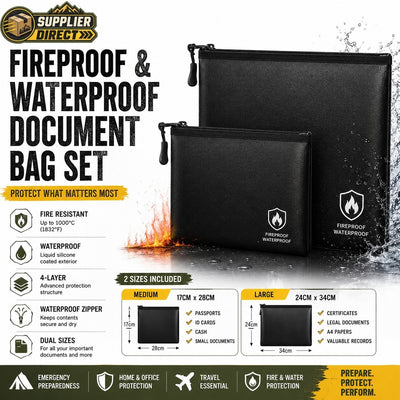
Printed copies, or a USB, sealed in a waterproof pouch:
- ID, licences & passports
- Medical info, allergies & prescriptions
- Insurance & property documents
- Banking details & emergency contacts
Practical Evacuation Gear
Small, light items that solve big problems when you're away from home.
Find Your Way
- Whistle for signalling
- Glow sticks for safe light
- Paper map of your local area
- Notebook & pen
Stay Protected
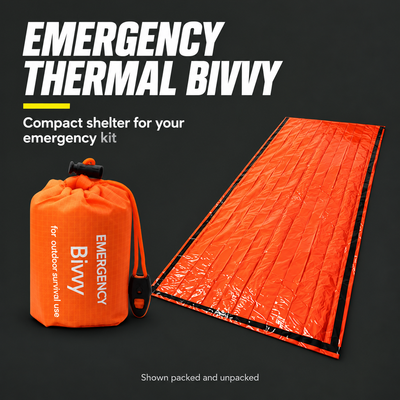
- Emergency space blanket
- Small tarp
- Paracord or strong rope
- Duct tape
- Cash in small notes
Worth Adding
- Portable AM/FM radio
- Thermal layers
- Solar lantern
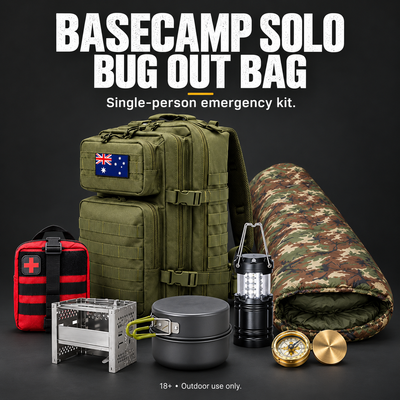
- Small camp stove (outdoor use only)
Pets, Kids & Baby
Everyone in the house needs something different. Build their add-ons into the plan now.
Pet Go-Bag
- 3 days of food & water
- Lead or harness
- Carrier or crate
- Medications & vet records
- Waste bags or litter
- ID & a recent photo
Little Ones
- Nappies & wipes
- Formula & bottles
- A comfort toy or blanket
- Extra snacks
- Child ID card with your contact details
Keep It Ready
A go-bag only works if it's charged, in date and where you expect it to be.
When to Grab It
If you're asking yourself whether it's time to go, it probably is.
Evacuation order? Grab it and go.
Don't stop to pack more. That's what the go-bag is for.
Grab your go-bag for
- Evacuation orders for bushfire, flood or cyclone
- Sudden extreme weather
- Long power outages
- Structural damage to your home
- Medical emergencies away from home
Hazard guides
Each disaster needs a few extra items. See the full guides:
Skip the Shopping List
Grab a ready-made emergency kit, or build a custom go-bag around your household in a few clicks.
More From the Survival Hub
This guide provides general preparedness information based on best-practice emergency planning. Always follow directions from local authorities and emergency services. In a life-threatening emergency, call Triple Zero (000).